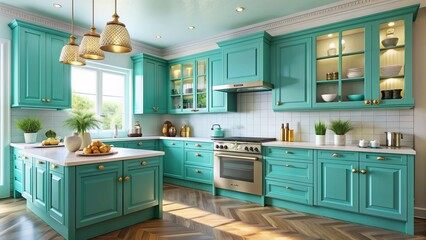
Over time, old laminate cabinets can lose their luster. Fortunately, painting them can revive their looks and update your kitchen without costing a fortune.
Laminate is a non-porous surface that requires special products to bond properly. Follow these cabinet painting dos and don’ts to get a long-lasting, professional finish. Visit Cabinet Painting Sacramento for more information.
Clean the Cabinets
Before you can paint, you must first clean the cabinets. This is a process that requires a little more work than simply spraying down the surface and wiping it dry, but it’s an essential step in ensuring that your new coat of paint will adhere properly. This is because laminate does not absorb paint and primer the way that wood does, making it less receptive to these products.
Fortunately, there are some cleaners designed specifically for use on laminate surfaces. These are a bit less harsh than many chemical cleaning solutions and can be used without fear of damaging your new cabinet finish. To get the most out of your cleaner, it’s best to start by using a soft cloth to remove as much dirt and dust as possible before applying the product. This will help avoid scratching your finished cabinet surface, which can be a major headache down the road.
For best results, you should also try to clean your cabinets as regularly as possible. Wipe down your countertops with a slightly damp cloth after cooking to remove grease and prevent build-up. Avoid abrasive items like steel wool or rough scrubbers, as these will cause scratches on the laminate. Instead, wipe down your cabinet surfaces with a slightly damp microfiber cloth to keep them looking their best.
If you do choose to use a chemical cleaner, it’s important to follow the manufacturer’s instructions for usage. Many of these products will require you to put on a mask and protective eyewear for safety reasons, so take the time to do this before beginning your project. This will also prevent your chemicals from soaking into any unprotected areas of your laminate, which can lead to delamination down the line.
After the chemical cleaner has done its job, it’s time to sand your laminate surfaces. This is the hardest part of this process, but it’s also a very important one. Depending on your particular cabinet finish, you may not even need to sand it at all, though it’s always recommended to do so. If you skip this step, you’ll be grinding the laminate away, which will make it impossible to bond with your new primer and paint.
Sand the Cabinets
A fresh coat of paint is a great way to upgrade your kitchen, but you’ll have to go through some prep work first. One of the most important steps is sanding the cabinets to create a smooth surface for painting. Without sanding, the paint could chip and flake over time, leaving your kitchen looking old and drab. If you’re re-using your existing cabinet doors, you can skip this step, but if you’re replacing the door fronts with new laminate ones, it’s essential to sand them down and prepare them for painting.
To sand your cabinets, start by thoroughly cleaning them to remove any grease or grime. You can use a degreaser or mild detergent to get the job done. Then, make sure you’ve removed all the hardware, including knobs and pulls. This will make it easier to access the cabinet surface and get it sanded evenly. Then, lay the cabinet doors flat and sand them with a coarse grit, like 80 or 100. After that, switch to a medium grit to smooth out the rough surfaces. Finally, switch to a fine grit, like 120 or 220, to further smooth the surface and prepare it for painting.
Some people absolutely hate sanding and will go to extreme lengths to avoid it. But it’s really the only way to give your laminate cabinets a smooth, even surface for primer and paint to bond with.
You can also use a laminate-specific primer to skip the sanding and priming process altogether, but you’ll still need to apply at least two coats of paint (plus a topcoat) for full coverage.
Be sure to sand carefully, using light, steady pressure and following the grain. If you overdo it, you can damage the laminate surface and make it less durable. Also, be sure to wear a dust mask and chemical-resistant gloves when working with sandpaper or any other chemicals. And remember, painting can release harmful fumes, so be sure to open windows and use fans to increase ventilation. And, of course, don’t leave children or pets unattended while you work.
Prime the Cabinets
Cabinets are high-traffic, high-abuse surfaces that require a durable, tough paint that will resist chipping, peeling, and staining. Skipping the priming step, or using the wrong primer, will lead to poor adhesion and a prematurely failing paint job. A good primer is non-negotiable for a quality, long-lasting paint job on laminate cabinets.
Unlike wood, which is porous and can accept many types of paint, laminate is a smooth, non-porous surface. To allow paint to adhere properly, it is necessary to roughen the laminate surface with sandpaper. Use a fine-grit sandpaper to lightly scuff the surface, being careful not to gouge or damage the laminate layer. After sanding, wipe the area down with a clean cloth to remove any dust particles and debris.
After the sanding is complete, you can begin to prime the cabinets. The best type of primer to use on laminate is an oil-based primer. This will ensure the strongest and most durable bond between the primer and the laminate surface. A quality latex wall primer will also work, but it is important to choose a high-adhesion bonding primer for cabinets, rather than a standard interior wall paint.
Apply the primer with a roller or sprayer, allowing plenty of time for it to dry completely. If you’d like, you can use a brush to cover any areas the roller couldn’t reach. Once the primer is dry, you’re ready to start painting.
To get the best results, apply two coats of paint. Ideally, you should wait a day in between each coat of paint. During this time, be sure to protect your work area with a drop cloth and any surfaces that aren’t being painted, with either plastic or paper.
Once the final coat of paint is applied, let it dry thoroughly again before re-attaching your doors and hardware. It may take up to 30 days for the paint to fully cure.
A fresh coat of paint can transform your outdated laminate cabinets into the focal point of the kitchen. With proper preparation and a quality paint, your new kitchen cabinets will last a decade or more, saving you the cost of an expensive replacement.
Paint the Cabinets
Laminate is a synthetic, wood-like material, usually printed with a pattern to resemble real wood. It is designed to be non-porous and smooth, with a glossy surface to resist moisture and stains. This makes it ideal for cabinets, which get heavy use and can be subject to damage. However, these properties also make laminate difficult to paint. Wood has a natural grain and porosity that allows paint to penetrate and mechanically “grab” the surface, but laminate cannot accept this. Paint applied directly to an unprepared laminate surface simply sits on top, and it will quickly deteriorate under daily wear.
To prevent this, it is necessary to roughen the laminate with sandpaper before painting. The sanding process also helps to remove any oil or grease, and it will help the new paint adhere properly. Once the cabinet is sanded, you can apply a high-quality primer to prepare it for the finish coats.
Once the primer is dry, you can begin the actual cabinet painting. It is best to do this outside or in a well-ventilated area, such as a garage. Before beginning, make sure you have a good pair of gloves and protective eyewear. Also, cover countertops and appliances with painters tape to protect them from splashes and spills. Begin with the cabinet frames, using a roller for the larger flat surfaces and a brush for tight spots and edges.
When you are done with the frame, move on to the doors and drawer fronts. Start by removing any hardware, and then carefully remove the hinges and handles to allow you to paint them separately. Once the door and drawers are painted, you can reattach them to the cabinet frames and allow them to dry thoroughly.
If you are using a color that is the same as the existing cabinet finish, two coats of paint should be enough. If you are changing the color, however, it may take three or more coats to achieve an even and opaque coverage. Be sure to allow the cabinet doors and drawers to fully dry between coats, and keep a brush handy for touch-ups as needed.